How AI restaurant financial reporting helped JENKI cut a day of reporting to minutes
JENKI, a London matcha bar group, uses Tenzo’s AI restaurant financial reporting to replace manual spreadsheet reporting with a live, unified view of sales, labour and reviews. Finance Director Luke Simpson cut a weekly report that used to take up to four hours, down to minutes, supporting growth from four sites to seven without adding headcount.
JENKI, the London matcha bar group, uses Tenzo’s restaurant reporting – pulling sales, labour and review data together through our analytics platform and AI connector (MCP) – to turn a week’s worth of manual reporting into a same-day conversation. Since adopting Tenzo, Finance Director Luke Simpson has cut a report build that used to take 4 hours down to minutes. That reclaimed time is a direct input into how JENKI has scaled: freed from a day of manual report-building each week, Luke’s role can span payroll and invoicing in-house even as the group has grown from four sites to a planned ten by year-end.
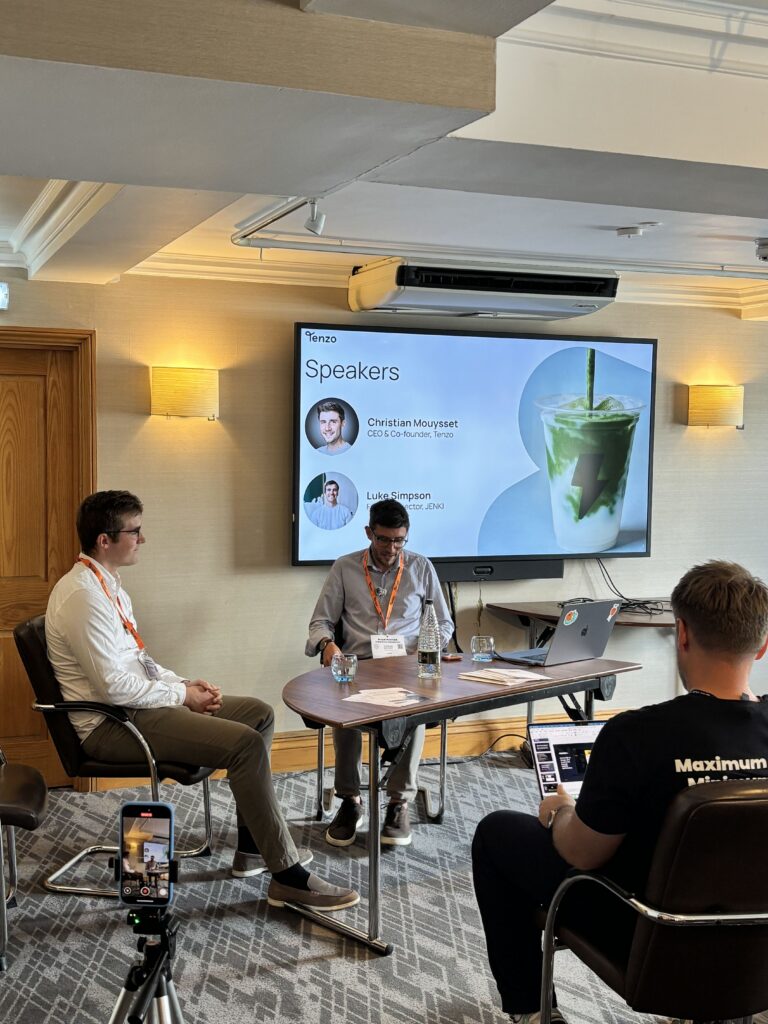
We recently spoke to Luke at the Propel Multi Club Summer Conference 2026, in conversation with Tenzo co-founder and CEO Christian Mouysset. You can watch the full conversation below, and here’s the story behind it.
About JENKI
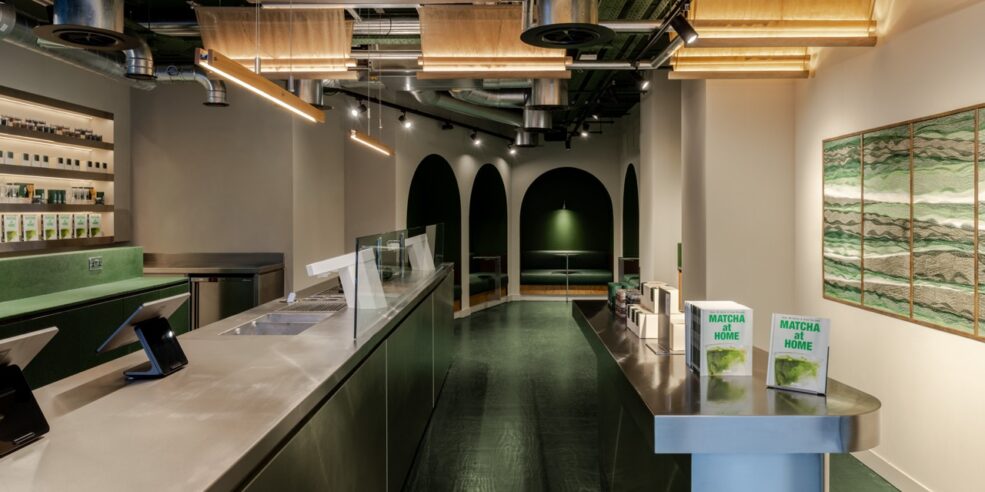
JENKI is a chain of matcha bars across London, alongside an online and wholesale matcha business. The group opened its seventh site the same day Luke joined the stage to talk about Tenzo, with an eighth on the way and ten sites targeted by the end of the year.
It’s a lean operation by design. As Luke put it: “We’re still a relatively small business, so a lot of the time my role in finance is attributed to the numbers.” That combination – fast growth, a small central team, and a finance director with a data and Python background – is exactly the environment where manual reporting stops scaling first.
The challenge: a full day lost to a static spreadsheet
Before Tenzo, JENKI’s reporting was built by hand, one spreadsheet at a time. Luke described it plainly:
“Before Tenzo, it was myself creating an Excel sheet that I would then PDF, with as much data as possible – would take me anywhere between two to four hours each week.”
The problem went beyond time. Data lived in different places depending on the site – JENKI’s Selfridges had a separate, so even pulling together a single group-wide view meant reconciling systems that didn’t talk to each other. The result was a static document that the team emailed around ahead of a weekly trade call – it told them what had happened but gave them nothing they could interrogate live: “It would just be very much focused on that sheet and not be able to do anything live.”
The solution: AI restaurant financial reporting built on one live platform
Tenzo isn’t finance software in the accounting-package sense – it’s an analytics platform that pulls together the sales, labour and inventory data finance teams need, and layers AI reporting on top so that data is usable without a manual build. JENKI now runs its sales through Square, its labour through Deputy, its reviews through Google, and its online orders through Shopify – all feeding into Tenzo, giving the business one unified view in place of the separate spreadsheets and manual pulls it relied on before.
On top of that, Luke uses Tenzo’s MCP – the AI connector that lets him ask Claude questions directly against JENKI’s live operational data, without exporting a single CSV. It’s the kind of setup that’s shifted how the team approaches flash P&L reporting: figures stay live rather than sitting compiled after the fact.
The switch to Tenzo wasn’t just about the numbers – it was about who could understand them.
“One of the reasons that I wanted to change was just how easy it was for everyone, regardless of role, to understand the numbers, and you can create different dashboards for different people.”
How JENKI uses AI restaurant financial reporting day to day
1. Testing product decisions with real data
The clearest example Luke gave was a same-day product decision. JENKI was weighing whether to introduce an alternative milk, and turned to the MCP rather than guesswork: “I typed in – wanted to then look at from January to July, all our Google reviews, and every time that milk or an alternative milk was commented on, it would then return it and give me a sensitivity score on whether it was negative or positive.” The data showed a small but real group of guests unhappy they couldn’t get an alternative – enough to settle the decision.
That speed compounds. A question that would once have meant an hour or two combing through Google reviews by hand now comes back in minutes: “It just would have taken us five minutes rather than an hour or two.”

2. Optimising shelf placement and upsells
The same live-testing approach shows up on the shop floor. After a refit, the team used Tenzo data to run a live test of the product’s shelf position – moving the book to eye level, then the tin, then the pouch – and tracked the sales impact of each change directly.
The same visibility now extends to staff performance on specific upsells, like JENKI’s Extra Rich Matcha and its new bake range, which Luke previously had “very little visibility of” without going site by site into Square. That granularity now supports a monthly incentive scheme the team couldn’t reliably run more than once a quarter before.
3. Building reports that run themselves
For reporting further up the business, the MCP has replaced the one-size-fits-all sheet entirely. Luke Simpson, Finance Director at JENKI, can now build a report to a stakeholder’s exact brief once and have it run automatically:
“It’s a case of sitting down and saying, ‘I want this, this, and this,’ and I can create that in Claude into a PDF that now runs every Tuesday, and it has exactly what I would like.”
The results
Weekly reporting that once took Luke two to four hours now takes minutes, freeing up a full working day every week that used to go into building a single spreadsheet.
That time saving is a big part of how JENKI has scaled its finance function without scaling headcount: the business has grown from four sites to a planned ten by year-end, and Luke and one other person still run finance, payroll and invoicing in-house. Adding a new site to the platform, Luke said, now just means a message to his Tenzo account manager: “We need to add this site on, and away we go.”
Keeping the human decision in the loop
Luke was clear that the MCP informs decisions rather than making them. On the alternative milk call, he was direct about where the line sits: “That decision was a brand decision – supported by the numbers.”
Looking ahead
Today, the MCP is mainly a tool for Luke himself, though that’s changing – JENKI has training scheduled to bring GMs, ops and marketing into writing their own prompts, on the view that “the prompt is more important than the actual connector.” As JENKI continues its run toward ten sites and beyond, that same real-time visibility across sales, labour and guest feedback is what the team expects to lean on, running on Tenzo’s AI restaurant financial reporting and analytics platform as the estate keeps growing. If a small finance team is doing the same manual-reporting juggling JENKI used to, Tenzo’s demo is worth a look.
FAQs
Frequently asked questions
AI restaurant financial reporting brings sales, labour, inventory and cost data into one platform and uses AI to answer questions against it directly, so finance teams get live reporting without manually pulling numbers from separate systems. For multi-site groups like JENKI, it replaces spreadsheet-built weekly reports with a live, always-current view.
At JENKI, Tenzo cut a report build that took two to four hours a week down to minutes. The saving came from replacing manual Excel-and-PDF reporting with one platform pulling data automatically from Square, Deputy, Google and Shopify.
No – it changes what a small finance team can cover, not whether one is needed. JENKI still runs finance, payroll and invoicing in-house with two people; AI-powered reporting removed the manual work that would otherwise have forced them to hire to keep pace with growth.
Yes. Tenzo unifies data from POS (Square), labour scheduling (Deputy), reviews (Google) and online orders (Shopify) into a single view, which is what let JENKI reconcile its Selfridges site – it sits under a separate agreement with its own tills – into one group-wide report.
The MCP lets finance and ops teams ask questions directly against live operational data in plain language, rather than exporting spreadsheets first. At JENKI, the team uses it to test product and merchandising decisions and to build recurring reports – the AI surfaces the data and a sensitivity score, but the team still makes the call.
It suits them particularly well. JENKI runs its finance function with two people across a growing estate; AI-powered reporting makes that possible, because it removes the manual work that would otherwise scale with headcount rather than with the business.