

See how Tenzo's MCP is built...
...to learn your definitions, not just your data.
Explore the AI connectorTrust, AI and the expectations of the common operator.
“It seems I made an error in my previous response”, “Good catch, let me try again”… are you familiar with this generic AI reply?
For any operator working with AI right now, this is a common conversation killer, hindering businesses where AI could make a real difference.
From conversations with customers, this ‘error’ often feels like the first step backwards, when really AI promises leaps forwards. A number wrong too often, or a percentage calculated with the wrong definition, and trust starts to break down. When that happens, operators return to the methods they’ve leant on for years: doing it by hand and on spreadsheets, eating up a good chunk of time.
So the question here is: why is hospitality struggling to move to, and trust, AI?
Right now, most hospitality businesses are juggling three different sources of truth at once, often without realising it. There’s the data coming out of your systems: POS, labour, inventory, reservations. There’s the context coming from your GMs, the notes and explanations that sit alongside the numbers. And increasingly, there’s a third layer sitting on top of both: AI, answering questions about your business using that data and that context together. Each of these sources requires its own relationship of trust, and trusting one has never meant you’d automatically trust the other two.
Your tech stack and your GMs earned their trust over time, through hard work and probably a few mistakes along the way. A GM’s word carries weight because you know them, you trained them, and they know the front line better than head office ever will. That’s what operational engagement looks like at its best: a second source of truth every bit as real as the transactional data sitting next to it.
Because it’s AI, because it’s supposedly intelligent, the assumption has been that it should simply arrive already trustworthy. I think that expectation is a little backwards and it’s what is quietly undermining a lot of AI strategies in hospitality at the moment.
Here’s a good example of why. Two sites running the same POS and labour tool can calculate labour percentage in different ways. Gross or net? Does the figure include pensions and holiday pay? Point an AI at raw numbers like this without telling it which definition your business uses and it will still give you a confident answer. It just won’t be the one you expect – that isn’t a capability problem.
AI is entirely capable of getting this right. The problem is nobody gave it precise instructions the way your systems and your GMs were given theirs, yet it answered anyway, because that’s what it’s built to do.
This is also why choosing an AI tool is a considerably more complicated decision than bolting a chatbot onto an existing POS, labour or inventory system. It’s about whether you’re willing to do the less glamorous work of teaching it: the definitions, what “on target” actually means at each site, the context a GM would give without being asked twice. Skip that step and the result is a third source of truth that quietly disagrees with the other two and that disagreement sends many operators straight back to the spreadsheets.

Curious what ‘clear instructions from day one’ looks like in practice?
See how JKS Restaurants built that trust with Tenzo’s MCP.
Now to reassure you. This isn’t about giving AI years to learn but about giving it precise instructions from day one. Someone described it to me recently as managing a slightly wayward intern: capable and quick, but it does exactly what you told it, not what you meant, unless the definitions and context are spelled out up front. Businesses expecting AI to arrive already understanding their operation are the ones most likely to catch it getting things wrong, and lose faith in it altogether. Businesses willing to give it clear, precise instructions from the outset are the ones who end up with an answer they can act on.
So instead of asking what an AI strategy should look like, I’d suggest asking if it’s been given – by you or your provider – the same instructions your tech stack and teams have already had. Does it understand that one of your sites is in rural Wales and the other in central London?
Trusting the raw data from your tech stack is separate from the trust you have in a GMs’ reports. And trusting both of those doesn’t mean whatever an AI produces on top is trustworthy. Each one earns trust separately, on its own terms.
The operators who get ahead over the next few years are unlikely to be the ones who adopted AI the fastest. They’re more likely to be the ones who did the work of giving it the same foundations everything else in their business already had.
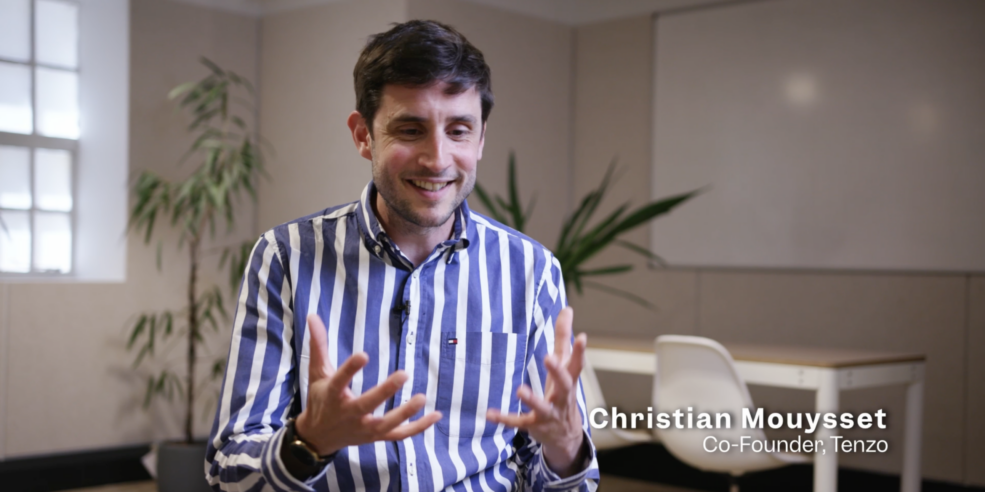
Christian Mouysset is co-founder and CEO of Tenzo.