Ottolenghi case study: Replacing spreadsheets with AI reports

Ottolenghi, the 10-site UK restaurant group, uses Tenzo MCP – an AI for hospitality tool – to ask its restaurant data direct questions instead of waiting on custom-built dashboards. Since rolling out Tenzo in January, the team has used the MCP to interrogate performance data, from spend per head to daily reporting, without needing a background in data analysis.
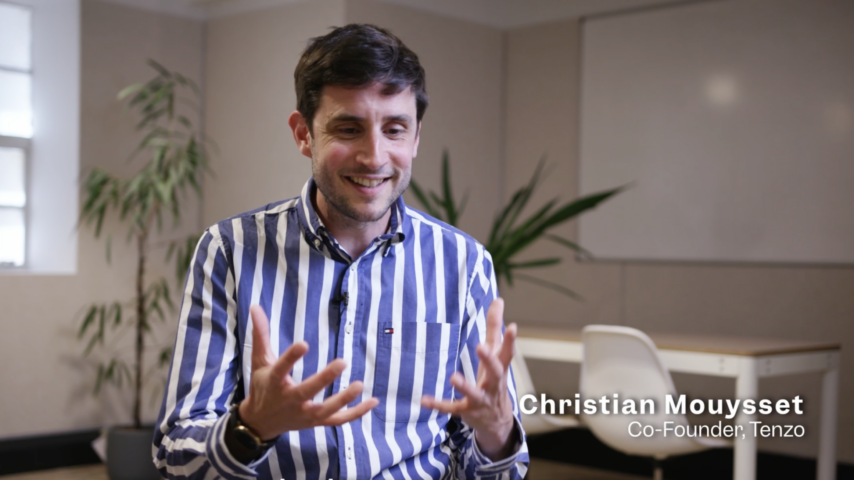
We recently spoke to Debbie Thomas, IT Director at Ottolenghi Group about how the 10-site business – soon to be 11, with a new site opening in Edinburgh this September – has built its reporting from the ground up since implementing Tenzo in January. The video above captures the conversation in full; here’s the story behind it.
About Ottolenghi
Ottolenghi began life in 2002 as a small deli in Notting Hill, founded by chefs Yotam Ottolenghi and Sami Tamimi alongside Noam Bar. What started as one shop known for vegetable-forward, Middle Eastern-inspired cooking has grown into a group of delis and restaurants across London, including NOPI and ROVI, plus sites further afield in Oxfordshire. This September, the group opens its first Edinburgh site – its first move into Scotland.
Why did Ottolenghi need an AI reporting tool?
Before Tenzo, Ottolenghi didn’t have a single, collated view of its data at all. Dashboards and reporting had to be built from scratch — and even once they existed, they couldn’t cover every question the business wanted to ask. As Debbie put it:
“One of the challenges we found is sometimes people want to be able to interrogate certain pieces of data, but it’s not necessarily been developed within Tenzo, because you can’t have every single possibility.”
That’s the gap Tenzo MCP was built to close. Rather than requesting a new filter or report every time a question came up, the team could simply ask.
How does Ottolenghi use Tenzo MCP day to day?
Debbie describes the shift as fundamentally about business performance – giving people across the business the insight to act, not just a number to look at:
“It’s business performance and giving the business insights into what can they actually do to make the business improve. It might be something along the lines of: what’s my spend per head, and what ideas could you give me to increase my spend per head.”
That distinction matters. Tenzo’s dashboards and cards are built to be comprehensive, but interpreting them still takes a level of data fluency not everyone in a hospitality business has. The MCP closes that gap:
“Tenzo is great with its dashboards and its cards, but if you’re not a person that can then interpret that data and understand what it’s actually telling you, that’s where the MCP will be a real benefit – because it will help people to understand those data points.”
What’s next: bringing Logbooks into the MCP
Ottolenghi is also rolling out Tenzo Logbooks, and Debbie is already looking ahead to how that will feed into the MCP. The goal: giving ops managers a single, pulled-together view of the business instead of ten separate reports to read every morning.
“For an ops manager to then be able to pull all that information in, without having to go and read ten different ops reports every single day – that’s gonna be game-changing.”
How should restaurant groups roll out AI tools to their teams?
Debbie’s advice for other multi-site operators considering the same move is practical rather than technical. It starts with clarity of purpose, not the tool itself:
“Understand what it is that you want to know. What problem are you trying to solve? So that you can then be really specific in your questioning.”
And it means pacing the rollout deliberately:
“Take it slowly. Test it. Make sure that you’re happy with it before giving it out to your users. We don’t need to overburden our GMs any more than they already are.”
Not heard enough yet?
Listen to how Public House Group used AI restaurant reporting to replace manual reports or how JKS use the MCP to assist their financial reporting.
Videography by Chandler Media.

Learn how Tenzo’s AI connector can benefit your business.
Uncover insights with the Tenzo MCP.