
Tenzo Passthrough: Orchestration for Restaurant Tech Stacks That Don’t Talk
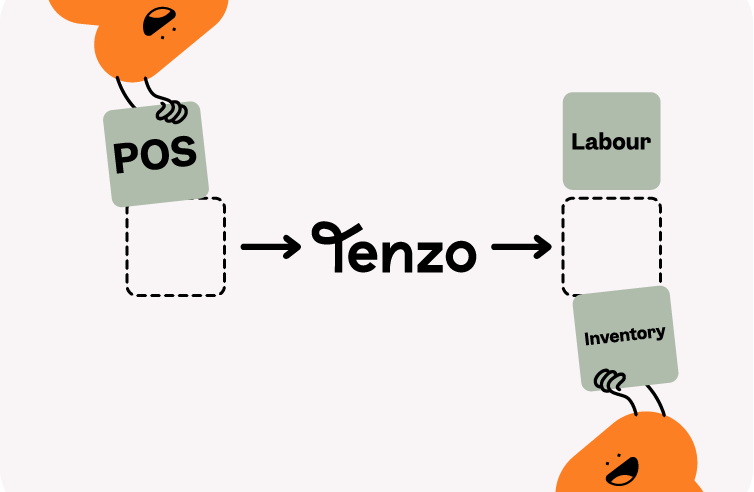
Vapiano Australia wanted a simple outcome: accurate food cost reporting in MarketMan across its 10 locations. Their sales data lived in Abacus, but without a direct integration between the two systems, transferring that data required manual work and caused operational friction.
By using Tenzo Passthrough, Vapiano was able to pass item-level sales data from Abacus into MarketMan across all 10 sites, allowing stock to be depleted automatically and “theoretical usage” to be calculated for menu items such as pizzas, burgers, and drinks.
Instead of relying on staff to manually reconcile sales and inventory, Tenzo enables MarketMan to behave as if it has a native POS integration – unlocking a multi-location rollout that would not have been possible otherwise and making MarketMan significantly more embedded and “sticky” within Vapiano’s operations, without the cost of building an Abacus integration.
This isn’t a failure of either platform. Abacus serves its market well. MarketMan solves real inventory problems. The issue is structural: hospitality operators don’t choose tools based on integration matrices. They choose tools that solve specific operational problems, often across different regions, price points, and use cases. The result is tech stacks assembled for good reasons that can’t coordinate with each other.
In this blog we will be exploring how Tenzo Passthrough is the solution acting as an orchestration layer that enables integrations between previously unconnected platforms, allowing labour tools and inventory platforms to access POS data without requiring native integrations.
This unlocks deals for partners, gives operators stack flexibility, and ensures data flows where it’s needed – without forcing vendor changes or waiting for integration roadmaps to catch up with market needs.
Why Point-to-Point Integrations Don’t Scale Anymore
The standard answer to integration gaps has been “wait for a native integration” or “middleware solution”. Both approaches break down when you look at how restaurant tech actually gets adopted.
Restaurant groups operate across different regions with different dominant platforms. A brand expanding from the UK to the Middle East encounters entirely different POS ecosystems. An operator in Australia faces different labour management tools than one in North America. The combinations multiply faster than native integrations can be built.
Point-to-point integrations also assume stable tool selections. In practice, operators change POS systems during site rollouts, swap labour tools when they expand into new markets, and adopt new inventory platforms when they switch distributors. Each change breaks integrations that were working.
And operators don’t want fewer tools: they want the right tool for each job, and will find alternative tools if needed. A head of operations choosing labour scheduling software cares about shift management features and mobile accessibility, not whether it has pre-built connectors to every POS system their franchisees might use.
What’s missing isn’t more integrations. What’s missing is orchestration that allows best-of-breed tools to work together. As Klaus Kohlmayr from IDeaS puts it, “it’s not about best in breed or all in one but about having the best connected technologies.”
The industry is moving towards modularity, where the best tools work seamlessly together. Succeeding in this world requires integrations to be done right – and at scale.
What is Passthrough?
Tenzo Passthrough is an orchestration layer that enables integrations between previously unconnected platforms.
Passthrough connects to the customer’s POS system if it’s part of Tenzo’s 90+ existing integrations, pulls in sales data at a granular level, and then pushes that sales data to labour tools and inventory platforms in the same format as a native integration would. The customer sees their sales data in their labour or inventory platform exactly as they would with a direct POS integration.
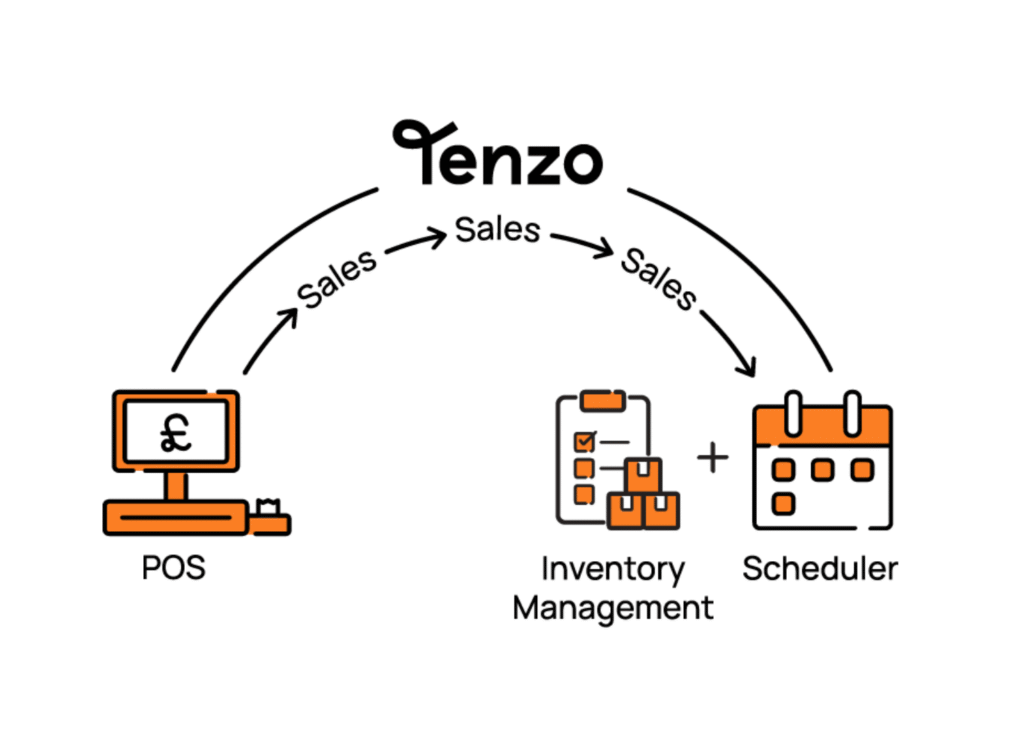
Passthrough is used when operators have chosen specific tools for specific reasons but those tools don’t have native integrations with each other. It’s used when restaurant groups expand into new markets with different platform ecosystems and when labour platforms or inventory platforms need access to POS data but building that integration isn’t ROI positive for either vendor.
Passthrough is not middleware that requires custom configuration. It’s not a replacement for existing integrations. It orchestrates data flow between platforms that operators have already chosen, making their tech stack work together without forcing vendor changes.
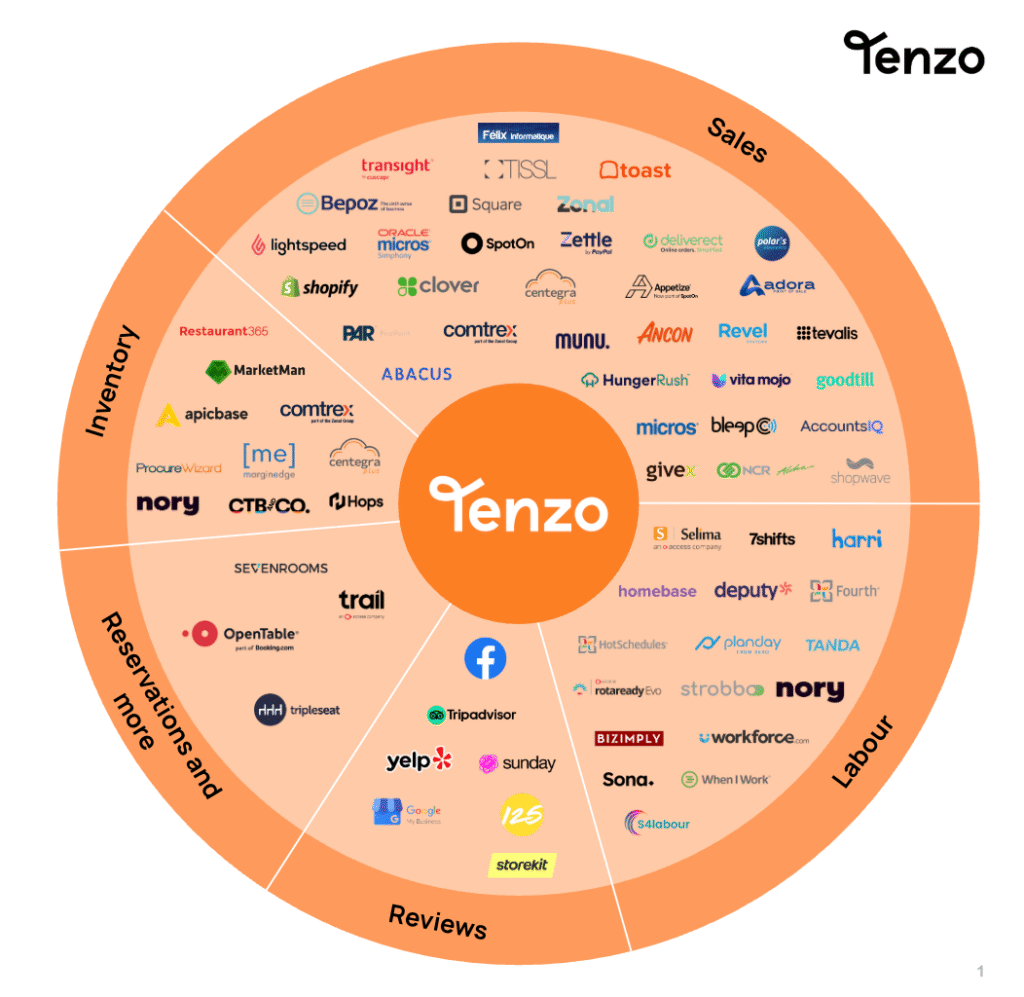
By building into Tenzo, partners get access to the entire ecosystem in one go. If a partner is coming to the UK, they’re likely getting 80% to 90% of the operational pieces of the UK tech stack through a single integration.
Why Tenzo Built Passthrough: From One Integration at a Time to One-to-Many
We kept seeing the same pattern across regions and restaurant groups. A labour platform would lose a deal because they didn’t integrate with a specific POS system. An inventory tool couldn’t expand into a new region because the dominant POS there wasn’t on their integration roadmap. Restaurant groups were making operational compromises based on integration availability rather than tool quality.
The bottleneck wasn’t product capabilities. It was the assumption that all necessary integrations would exist before an operator needed them.
Building integrations in hospitality tech is hard work. It takes deep technical knowledge, nuanced understanding of each use case, and strong commercial relationships. When Tenzo started nearly a decade ago, we solved a straightforward problem: how do we help operators access the data they need to run more efficient operations while juggling dozens of different platforms?
The first wave of work was relentless. We built one integration at a time, learning from each customer, improving incrementally. When we first started, it sometimes took us four or five months to build one integration. Now we can sometimes do it in less than a week. Our product became more flexible to integrations, and the team building them became a well-oiled machine.
This journey of building our first 90 integrations was essential in allowing us to understand what a universal standard could look like for the hospitality tech space – how to be efficient and fast, with the right level of granularity across the ecosystem.
Then we stumbled upon a key concept: one-to-many integrations. There’s a huge pain point in entering the hospitality tech space as a business that believes in the best-of-breed world. You have to go build each new integration:the slow, painful path we took.
But if we turn that idea on its head and open Tenzo’s infrastructure to allow others to grab restaurant-standardised data from our platform, others could build on Tenzo’s work instead.
Waiting for native integrations wasn’t realistic. Building and maintaining integrations is complex and costly. A labour platform serving primarily North American operators might not have ROI justification to build integrations for regional POS systems in Australia or the Middle East. But their product could serve those markets well if the integration gap could be bridged.
We also noticed that integration problems weren’t isolated to any single category. Labour platforms needed POS data. Inventory platforms needed sales data for accurate food cost tracking. Forecasting tools needed labour data. The coordination problem was ecosystem-wide.
Tenzo doesn’t work without integrations – they’re core to our product. We’ve built 90+ integrations because data aggregation is fundamental to restaurant operations. That integration infrastructure could solve the orchestration problem for partners, not just for Tenzo.
What Passthrough Enables for Partners
Passthrough changes what’s possible at deal close, during customer onboarding, and across market expansion.
Deal enablement: Partners close deals that integration requirements would otherwise block. A labour platform can win a contract with a restaurant group even if that group uses a POS system outside the platform’s native integration list. Passthrough handles the connection, and the deal closes. As Pete Saunders, Head of Hotel Relationships for Zonal, points out, customers “don’t have time to deal with multiple vendors and get these dirty integrations that just tick a box.”
Integration expansion without integration costs: Labour platforms and inventory platforms benefit from Tenzo’s 90+ POS integrations without building or maintaining them. A partner serving North American operators can expand into European or Middle Eastern markets where different POS systems dominate. Passthrough unlocks those markets without requiring new integration builds.
Sales and Integration Lead at Hops, Nathan Moorhouse, put it best “we have very limited time to build integrations and Passthrough opened opportunities using POS platforms like Micros Oracle, without the integrations they would not have been able to use Hops.”
Customer retention: Operators stay with platforms they like even when they change POS systems. A restaurant group switching POS system doesn’t need to also replace their labour tool if Passthrough maintains the data connection. Partners reduce churn from integration-driven platform switches.
Faster onboarding: Restaurant groups move from contract signature to live operations faster when integration setup doesn’t require custom connector builds or waiting for engineering roadmaps to align.
Our view is that by taking care of the integrations, our partners can continue doing what they’re best at, while giving our joint customers the most seamless integration experience possible.
Passthrough solves the coordination problem without requiring partners to expand their integration teams or delay market expansion.
What Passthrough Enables for Operators
Operators gain flexibility in tool selection and continuity across operations when their tech stack can coordinate without vendor lock-in.
Tool selection based on capabilities, not integrations: Restaurant groups adopt the labour platform with the best shift management features, or the inventory platform with the best purchasing workflow, without confirming integration compatibility first. Passthrough bridges the gaps.
Stack continuity across expansion: A brand expanding from one region to another doesn’t need to replace their labour tools or inventory platforms when the regional POS ecosystem changes. Passthrough orchestrates the new POS data into their existing tools.
Complete data for forecasting and reporting: Operators running different POS systems across regions can still generate consolidated sales reporting. Groups using inventory data from one platform and sales data from another can still build accurate food cost forecasts. Passthrough ensures data flows where it’s needed.
Reduced vendor risk: Operators aren’t locked into specific vendors because changing one platform would break integrations with three others. Passthrough maintains data connections even when specific vendors change. They own their data and decide where they want it to go.
As a bonus, operators using Passthrough get free access to Tenzo’s sales reporting package. They see their sales data visualised within their labour or inventory platform, powered by Tenzo, giving them more insight into their operations without additional tooling costs.
Early Signals from Partners and Operators
We’re seeing Passthrough reduce friction in sales cycles and unlock market expansion that wasn’t feasible before.Tenzo partners using Passthrough can now confidently say “we have that integration” instead of losing deals to competitors.
Passthrough-enabled partner Harri secured all of London’s iconic Granger & Co locations by connecting to their Square POS – a previously unsupported system that was critical to the customer’s decision. This integration was a dealbreaker in Granger & Co’s choice of HR platform. With Passthrough, Harri moved fast, onboarded a customer they couldn’t have supported otherwise, and won the deal.
Market expansion is compressing timelines. Partners entering new regions don’t need to wait for integration roadmaps to catch up with market needs. Passthrough bridges the gap between “we want to serve this market” and “we have the integrations to serve this market.”
Hospitality tech remains hyper-regional, and the traditional push to chase growth in a different market gets blocked by lack of integration depth. Instead of building market-by-market, partners can move faster by plugging into an entire market at once through Tenzo. When Gotab expands to Australia, they don’t build a Tanda integration from scratch – they get it through Passthrough, along with access to the broader ecosystem already connected.
The pattern is consistent: when integration requirements stop blocking adoption, operators choose the tools that fit their operations, partners expand into new markets faster, and those tools work together.
Passthrough as Ecosystem Infrastructure
Passthrough isn’t Tenzo replacing labour platforms or inventory platforms. It’s Tenzo creating infrastructure that helps all platforms reach more customers without expanding their integration teams.
For partners, Passthrough extends market reach without integration costs. A labour platform doesn’t need to build native connectors to every POS system in every region. Passthrough bridges the gap. An inventory platform doesn’t need to delay a regional expansion because the dominant POS there isn’t integrated yet. Passthrough handles the orchestration.
This reduces integration pressure, not increases it. Partners can focus on building better labour scheduling, better inventory management, better operational tools. Passthrough handles the coordination layer so partners can focus on product development.
For operators, Passthrough means fewer forced choices between “the tool we want” and “the tool that integrates.” Restaurant groups build stacks around operational needs, not integration matrices. They adopt best-of-breed tools and those tools coordinate with each other.
When partners win, we win. Passthrough enables better coordination without requiring consolidation.
The Flywheel Effect: Geographic Focus Creates Network Momentum
About two years ago, we switched our strategy. We realised we needed to go deep into a specific region instead of wide across many markets. That region was the UK, and more specifically, London.
As Lenny Rachitsky said, “If the service requires supply and demand to meet, it always starts with a geographical constraint.” We learned that lesson the hard way. For partners heading to the UK, the value Passthrough provides is strongest. The network effects of being the operational hub are most powerful here. When a partner comes to the UK, we have a fast solution for them to plug into the ecosystem. Each time a partner connects with us in the UK, we start spinning the flywheel in the local ecosystem that partner has in their own region.
Our product was now serving two audiences: the operators we set out to help, and the partners that power the broader tech stack. Partners became more interested in working with us,the legacy players who wouldn’t answer our emails two years ago were now coming to us actively wanting to work together. The more deals we closed, the more we integrated with more partners. Soon enough, others started coming to us. The flywheel was truly spinning.
Now, the ecosystem we’ve built in the UK is launching us into new markets, from Australia to North America, from Belgium to France. When partners plug into Tenzo, they’re not just connecting to us; they’re joining a network that accelerates growth everywhere.
How This Fits Into PerformanceOps
Passthrough is infrastructure for the integrated restaurant operations model we’ve been describing as PerformanceOps.
PerformanceOps assumes that restaurant operators make better decisions when data from POS systems, inventory platforms, labour tools, reservations and reviews flows freely and consistently. Passthrough makes that flow possible even when those systems don’t natively integrate.
The stack audit work we’ve been doing with restaurant groups maps to Passthrough directly. When an operator identifies gaps in their stack, Passthrough becomes the orchestration layer that bridges those gaps without forcing tool changes. When a partner identifies integration barriers blocking deals, Passthrough removes those barriers without requiring integration builds.
The integrated flywheel we’ve written about depends on data continuity across systems. Sales data from POS systems flows to labour platforms for better scheduling. Inventory platforms receive sales data for accurate food cost tracking. Forecasting tools pull labour data and sales data from multiple sources to generate demand predictions. Passthrough provides that continuity.
Tenzo’s approach has evolved from providing a BI solution for restaurants to helping the hospitality tech ecosystem thrive as it grows in scope and complexity. Each integration is effectively both a new sales channel and an opening to a target market. Passthrough layers a new business model on top, opening Tenzo as the one bringing a new target market and sales channel to each new integration partner.
This is one piece of a broader thesis: restaurant operations improve when tools coordinate with each other, and coordination doesn’t require consolidation. Operators choose the best tool for each job. Those tools work together. Performance improves across labour efficiency, food cost management, sales forecasting, and operational reporting.
We don’t just want to be part of the stack,we want to make the stack work better for everyone. Including and especially for the restaurants.
Want to unlock deals with Tenzo Passthrough?
We currently have a pool of active Passthrough partners working with restaurant groups across regions.
If you’re a partner and work with existing Passthrough partners, speak to your partner manager about commercials for the specific account and make sure to refer the account to Tenzo.
If you’re a labour platform or inventory platform and want to become a Passthrough partner, fill out our form or email [email protected].
If you’re an operator whose tech stack doesn’t quite talk yet, reach out. We’ll map your current integrations, identify where Passthrough can bridge gaps, and show you what becomes possible when your tools coordinate with each other.
We’re now scoping out the next phase: partner certification, letting vendors self-serve their way into the Tenzo ecosystem. The goal? A more connected industry, where integrations aren’t a bottleneck but a catalyst. Keep your eyes peeled for more on this very soon.
If you’re building in hospitality and want to integrate faster, we’d love to talk. Let’s connect, build, and grow together.