
How The Pudding Pantry reduced labour costs by 3% pt and COGS by 2% pt with Tenzo
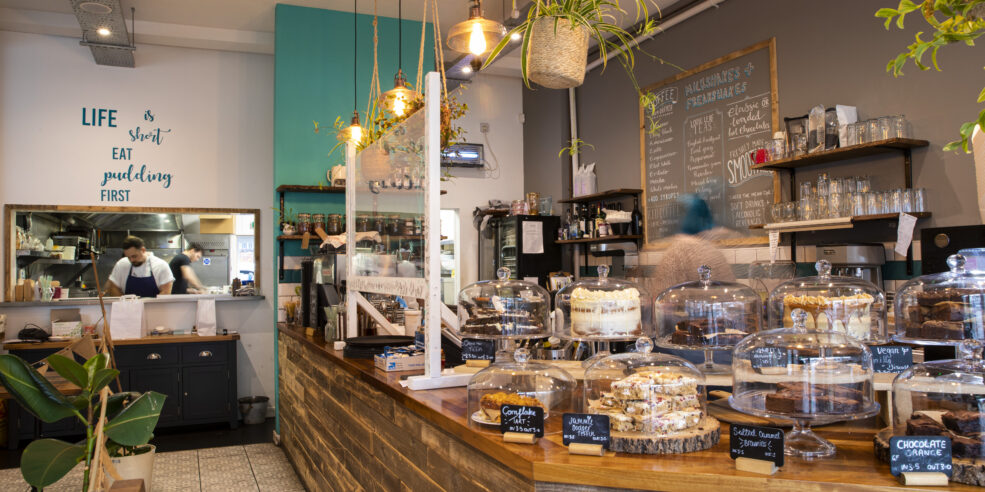
The Pudding Pantry, a three-site brunch and dessert restaurant group in Nottingham, use Tenzo to bring their scheduling, stock control, and POS data into one place. The result: a 3 percentage point reduction in labour costs, payroll forecasting accuracy of 98.7%, and a 2 percentage point improvement in cost of goods sold – from 30% to 28% of turnover.
We recently spoke to Jack Maloney, Business Development Manager at The Pudding Pantry, about how the team uses Tenzo’s restaurant analytics platform to bring all their data together, build KPIs that actually motivate their managers, and make more informed decisions about everything from payroll to menu pricing.
About The Pudding Pantry
The Pudding Pantry is a beloved Nottingham institution. The first site opened in the city centre around twelve years ago, followed by a second in Sherwood, and a third in Beeston which launched in 2021. Like many hospitality businesses right now, the team is navigating rising costs and wages. But as Jack puts it, adaptability is in their DNA:
“We’re very good at adapting and looking at what our customers want, what’s on trend, and try and keep up and keep innovating to stay relevant and keep the business coming through the door.”
The challenge: too many reports, not enough visibility
After COVID, the team embarked on a tech overhaul. They brought in Planday for scheduling, MarketMan for stock control, and, more recently, Square as their point of sale. Each tool had its own reporting, but getting a joined-up picture of the business meant clicking between programs and manually comparing outputs.
Jack described the problem clearly: “A lot of my job was clicking into one program and running a report on one metric, then looking at that while running a report from another program, whereas with Tenzo we can bring it all together.”
Tenzo was brought in to act as the connective layer – a single place to pull data from across the tech stack and make it usable.
How does Tenzo give restaurant operators control over their own data?
For Jack, what sets Tenzo apart is its flexibility. The team doesn’t just rely on out-of-the-box dashboards. They build custom cards tailored to their specific needs – some of which, Jack admits, can be a little unconventional:
“We can be a bit more specific. We might have some weird and wonderful metrics that we want to look at and we can do that with Tenzo.”
Jack checks the dashboard every day. He uses it not just for reviewing past performance, but as a tool for forward-looking project work – modelling the impact of price changes, labour cost adjustments, and other operational decisions on the overall P&L.
“If I’m looking at a particular project, there are certain figures that I want to see and that is where the card creator is brilliant. I might want to see; how much do we normally spend on labour? for example. I can then target how we bring that down or how a wage increase will affect that. Using the data from Tenzo I can then predict what that’s going to look like.”
How to use KPIs and bonus structures to control restaurant labour costs
Before Tenzo, the team knew they needed key performance indicators but didn’t have a straightforward way to establish and monitor them. That changed once the data was in one place.
Now, the three sites compete against each other in a points-based leaderboard, reviewed in weekly meetings. Managers are scored across a set of KPIs – and there’s a financial reward for hitting their targets:
“We’re able to offer a bit more of incentive to them that if they achieve or exceed their revenue target and if they spend less than we wanted them to on labour, there’s a financial reward for them in their paycheck.”
The bonus structure itself was born out of the data available in Tenzo. Jack built the targets based on what he could reliably find and track in the platform – a practical, ground-up approach to performance management:
“I’ve developed things like the bonus structure based on what I can see in Tenzo because I can easily find the numbers there. So it’s almost like a collaboration, if you like, because these numbers are easy to find. I can create a target for them, or I can keep looking at them and we can monitor how we’re performing.”
What results did The Pudding Pantry achieve with Tenzo?
The impact has been tangible. Using data from Tenzo, the team has built payroll forecasts that have been 98.7% accurate over the past year, reducing total payroll costs by 3.06% – over £30,000. Cost of goods sold has come down by two percentage points, from 30% to 28% of turnover.
Jack is careful to credit the wider team effort – the numbers are the result of hard work across the business, not any single tool. But having the right data to hand has made a real difference, particularly when it comes to supplier negotiations:
“We can say that we’ve bought 20,000 eggs in the past six months. That’s data we’ve taken from Tenzo to be able to go into that negotiation and say, well, look, these are the quantities or this is how much we’ve spent on this product and use that information to get the best prices.”
On the pricing side, Tenzo helps the team focus their efforts where it matters most. Rather than applying blanket price increases, Jack uses sales volume data to identify which items will have the biggest impact:
“The big breakfast that we sell is by far our biggest seller. If we only put 5p on that, then look how much more we’ll make in 12 months.”
More than reporting software – a restaurant business intelligence platform
When asked how he would describe Tenzo to someone who hadn’t used it, Jack focused on two things: having everything in one place, and the ability to make the platform truly your own.
“What I like the most is that all of the information is in one place. So it’s easy to use. And I like that it can be manipulated. I can edit and create cards, so it’s unique. It can be unique to your business, and you can see the data that you want to see.”
For Jack, Tenzo is more than a reporting tool. It’s the starting point for better decisions:
“It allows us to have the insights to look at what we want to in our business and make really informed decisions. There’s still a lot of hard work that our teams do, but it gives us the best possible starting point.”
With ever-rising costs, the team is using Tenzo to model the impact and plan their response – from targeted menu price adjustments to tighter labour controls. As The Pudding Pantry continues to grow, Tenzo’s restaurant analytics platform remains the starting point for those decisions that affect the bottom line.